Start With The Plant And The Process
Industrial electrical work needs a clear picture of what the plant does and how it is supplied. A new machine connection can affect the distribution system, maintenance access and the way equipment is isolated. We start with your operational brief rather than assume that every workshop needs the same solution.
Send the equipment manufacturer’s electrical requirements, the proposed location and any existing drawings. Include the person responsible for engineering or maintenance in the discussion. Information about starting loads, control interfaces and the intended operating pattern helps define the questions a site survey must answer.
Our industrial electrical enquiries cover commercial and industrial premises in Edinburgh and the surrounding districts. These can include warehouses, production units and trade workshops. Work on specialist process controls, hazardous areas or unusual equipment must be assessed separately and should never be assumed to be part of a general electrical installation quote.
Distribution And Machinery Supplies
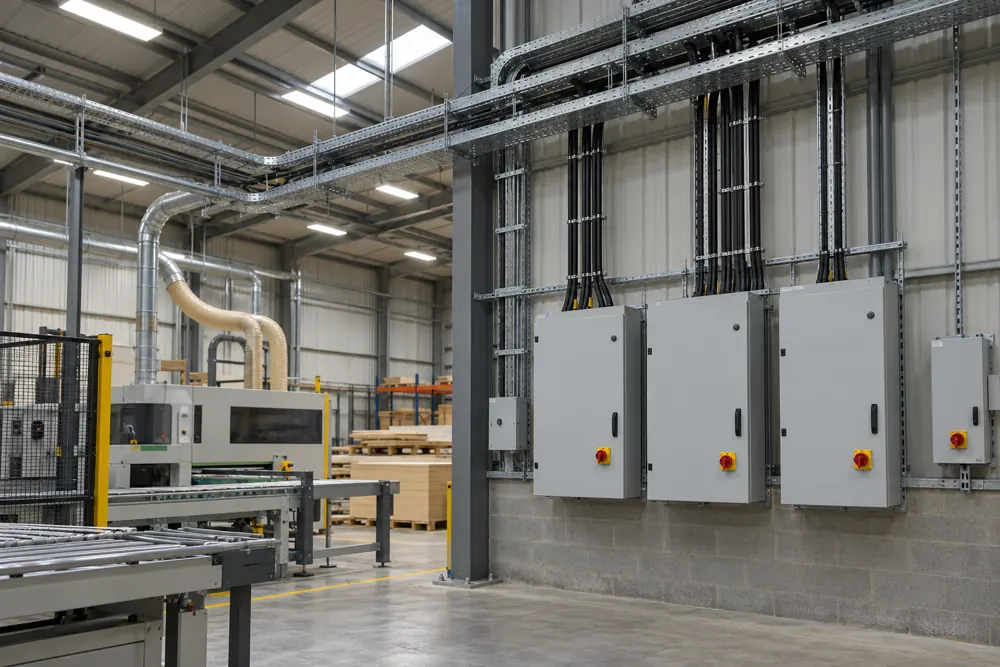
Typical project discussions include three-phase supplies, local isolators, electrical containment and distribution-board alterations. Cable selection and protective arrangements depend on the design conditions. Simply fitting a larger protective device is not a safe answer to nuisance tripping or an overloaded circuit.
A machine’s incoming electrical connection and its internal controls are different parts of the job. Agree the point at which the installation contractor hands over to the machinery supplier. Factory settings, interlocks and commissioning responsibilities need to be clear before anyone energises new equipment.
For alterations to existing systems, identify the affected circuits and any supplies that could remain energised from another source. Generators, stored energy and interconnected machinery can complicate isolation. The responsible people should agree the isolation plan and a safe route back into service.
Regulations And Site Responsibilities
Industrial electrical systems fall within the Electricity at Work Regulations 1989. Fixed installation design and verification use the applicable BS 7671 requirements. The electrical scope should record the equipment and environmental conditions it is intended to serve.
The Provision and Use of Work Equipment Regulations 1998, known as PUWER, also matter where work equipment is involved. An electrical connection alone does not establish that the machine is safe for its intended use. Your equipment assessment, guarding and operating procedures remain part of the wider machinery safety picture.
Tell us about dust, moisture, wash-down areas, vehicle movement and other site conditions. If there is a potentially explosive atmosphere, specialist assessment is needed before the work is specified. Do not use a general installation enquiry as confirmation that hazardous-area design is included.
Planning A Controlled Shutdown
First, define the change and identify the supply points. Review drawings against what is actually installed, including circuit identification and access to switching devices. An incomplete drawing set should be treated as a survey question, not as proof that a circuit is safe to disconnect.
Next, agree a shutdown window with the people who operate the plant. Record who can release the equipment for work and who can authorise restart. Consider the consequences for refrigeration, IT systems, ventilation and other equipment that may share the affected distribution.
After the installation, inspection and testing should confirm the electrical work before the agreed restart sequence. Relevant certificates and updated circuit information should be handed over. Any machinery commissioning or production validation should follow the responsibilities agreed with your equipment supplier.
Quotations And Information To Prepare
Cost depends on the supply arrangement, cable route, required protection and the working environment. High-level containment or difficult access can affect how the work is delivered. A phased shutdown and the need for several short visits may also change the labour involved.
Prepare the equipment schedule, available drawings and your proposed installation date. Explain whether equipment will be moved into position before or after the electrical work. If lifting, builders’ work or supplier attendance is needed, allocate it in the scope rather than leave it as an assumption.
Ask the quotation to distinguish fixed wiring, machinery connections, testing and specialist commissioning. State the documentation your engineering team requires. For existing installation condition, our fixed wire testing service can be discussed separately from the proposed industrial alterations.
Questions Before You Book
Straight answers to help you plan the next step.
Can You Arrange A Three-Phase Machinery Connection?
A three-phase machinery connection starts with the manufacturer’s electrical specification and a review of the available supply. The design must account for the circuit, protection, isolation and installation conditions. Include the machine details in your enquiry so the connection scope and any supplier commissioning requirements can be assessed before work is agreed.
Does Industrial Electrical Work Include Machine Controls?
Industrial electrical work does not automatically include machine control programming or specialist machinery commissioning. The quote should identify the boundary between the fixed installation and the equipment itself. Share control drawings and supplier requirements early so the right expertise can be identified and responsibilities are agreed before the planned shutdown begins.