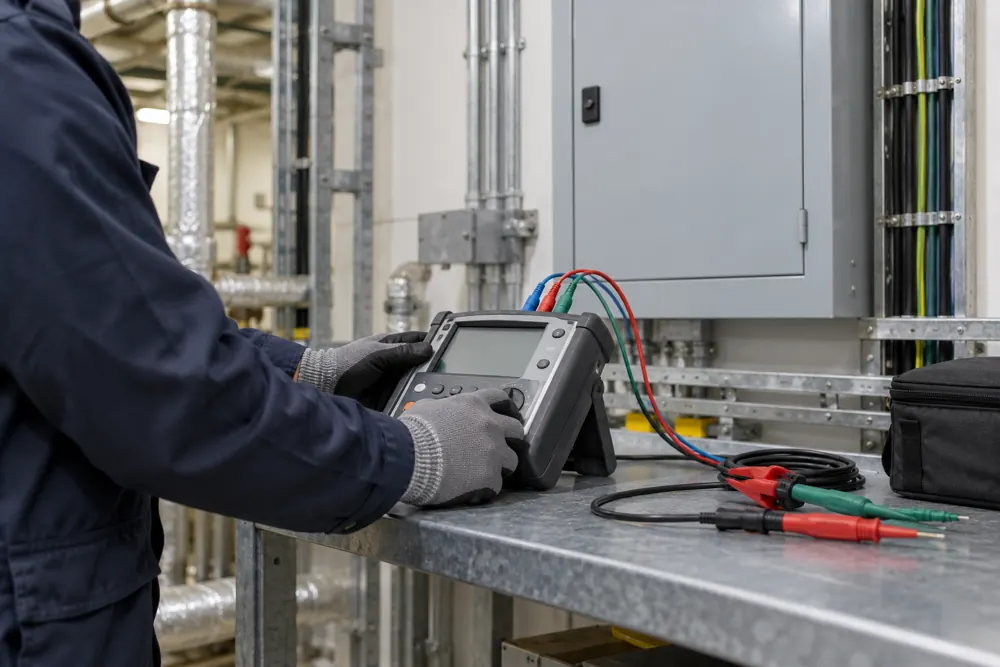
A Condition Report For Your Premises
A commercial Electrical Installation Condition Report, usually called an EICR, records the findings of periodic inspection and testing of a fixed electrical installation. It helps the person responsible for the premises understand its condition within the agreed extent and limitations. It is different from the certificate issued for a new installation.
The report is useful when you take on premises, review maintenance arrangements or need current evidence for a landlord or insurer. It is also relevant where records are missing or the building has changed use. Tell us what has prompted the enquiry so the inspection can be scoped around the actual decision you need to make.
An EICR is not an unconditional guarantee about every concealed cable or connected item of equipment. Access, agreed limitations and the installation information available all affect the inspection. Read those parts of the report alongside the overall assessment rather than relying only on the front page.
What The Inspection Covers
The fixed installation can include distribution boards, protective devices, wiring, sockets and other connected accessories within the agreed boundary. Inspection and testing are complementary parts of the assessment. A visual check alone cannot establish the same information as a properly scoped inspection with appropriate electrical tests.
Portable appliance checks and specialist systems should be identified separately. An EICR for the fixed wiring does not replace a dedicated emergency lighting assessment or a portable equipment maintenance programme. If you need several services, request a combined scope that names each deliverable.
For multi-tenant premises, clarify who controls common areas and supplies. The inspected installation must have a defined boundary, especially where landlord distribution feeds tenant boards. Missing access permissions or uncertain circuit ownership should be resolved before the visit where possible.
How Findings Are Presented
EICR observations use classification codes. C1 means danger present, C2 means potentially dangerous, C3 means improvement recommended and FI means further investigation required. The significance of a finding depends on the observed condition and the inspector’s assessment, not just the age of the equipment.
C1, C2 or FI findings lead to an unsatisfactory overall assessment. A C3 observation on its own does not. Ask for unclear observations to be explained and keep the report with the supporting test schedules so the remedial scope can be assessed properly.
An unsatisfactory result should lead to a defined response, with immediate danger addressed promptly. Remedial work and its certification are separate from the original inspection report. Keep both sets of records, including any subsequent investigation, rather than discarding the initial findings.
Preparing For An EICR Visit
First, gather the previous report, circuit schedules and records of alterations. Provide the premises layout, board locations and details of any equipment that must stay operational. The more accurately the installation is described, the easier it is to identify survey and access requirements.
Next, agree the extent of inspection, practical limitations and isolation arrangements. Electrical testing may interrupt supplies, so make a shutdown plan with the people who use the building. A facilities manager should identify server rooms, alarms and other sensitive loads before the visit.
After the inspection, review the overall assessment and each observation. Ask what requires immediate action, what needs investigation and what can be planned as an improvement. Request a separate remedial proposal if work is needed so approval of the inspection does not become an open-ended repair instruction.
Inspection Intervals And Cost
The Electricity at Work Regulations 1989 require electrical systems to be maintained to prevent danger. An EICR supports condition assessment, but there is no single interval suitable for every commercial installation. Use the previous recommendation, current condition, use and risk assessment to plan the next inspection.
Quotations depend on the number of circuits and boards, the installation’s complexity and the access available. Missing schedules, difficult isolation and phased access can increase the work required. Floor area alone is a weak basis for comparing commercial inspection quotes.
Ask what reporting, test schedules and return visits are included. For a tender or lease requirement, share the relevant wording before the scope is agreed. Our fixed wire testing page explains the testing arrangements in more detail if your priority is planning the site work.
Questions Before You Book
Straight answers to help you plan the next step.
Is A Commercial EICR The Same As Fixed Wire Testing?
A commercial EICR is the condition report produced from inspection and testing of the fixed electrical installation. Fixed wire testing is a common name for that activity. Confirm that the quoted service includes the report, inspection findings and test schedules, together with a written extent and any agreed limitations for your premises.
Does An Unsatisfactory EICR Mean A Full Rewire?
An unsatisfactory EICR does not automatically mean that a full rewire is needed. The observations identify the conditions that require action or further investigation. Some findings may need a local repair while others need a wider solution. Request a defined remedial scope based on the actual report before deciding how to proceed.